WELCOME TO DEOM
Benefit from exclusive offers, updates & more by joining ournewsletter
 GOOFY PACKING
The Truth About Sustainable Packaging: The Complete Biodegradation Process and Environmental Advantages of Kraft Paper Bags
2025-11-29 15:26:30
Click:
“
As environmental consciousness rises, sustainable packaging has become a shared
”
As environmental consciousness rises, sustainable packaging has become a shared goal for brands and consumers alike. Kraft paper bags, as a primary alternative to plastic packaging, are often praised as eco-friendly and biodegradable. But what is the truth behind these claims? Do they truly return to nature as harmlessly as we imagine? This article will break down the entire biodegradation process, compare it to plastic, and reveal the scientific facts.
Chapter 1: A Silent Return: The Natural Biodegradation Journey of a Kraft Paper Bag
The main component of a kraft paper bag is wood pulp, sourced from natural timber. Its degradation process is, in essence, a natural cycle of being 'consumed' and broken down by microorganisms.
The Stages of Biodegradation:
Stage 1: Initial Exposure (1-2 Months)
When a kraft paper bag is discarded in a natural environment (like soil), it is immediately exposed to moisture, oxygen, and microbes. Because its fibrous structure is porous, it quickly absorbs water and begins to soften. This is the first step that plastic almost never experiences.
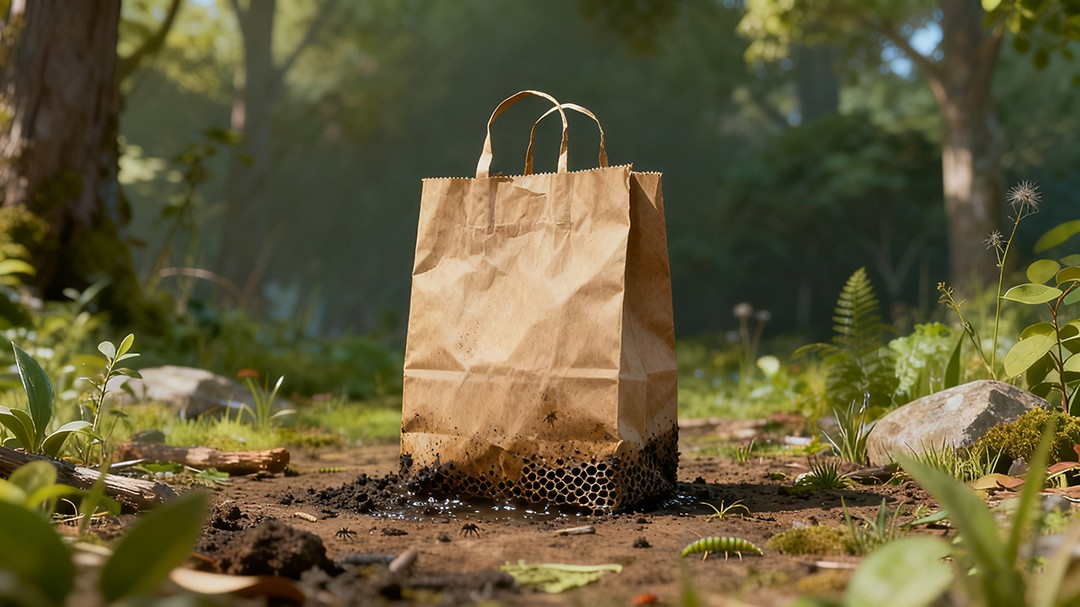
Stage 2: Physical Breakdown & Biofilm Formation (2-6 Months)
Aided by moisture and external physical forces (like wind, rain, or foot traffic), the bag's fibrous structure begins to disintegrate, becoming brittle and breaking into smaller fragments. Simultaneously, fungal spores and bacteria in the environment colonize its surface, forming a biofilm—a signal that the microbial 'feast' has begun.
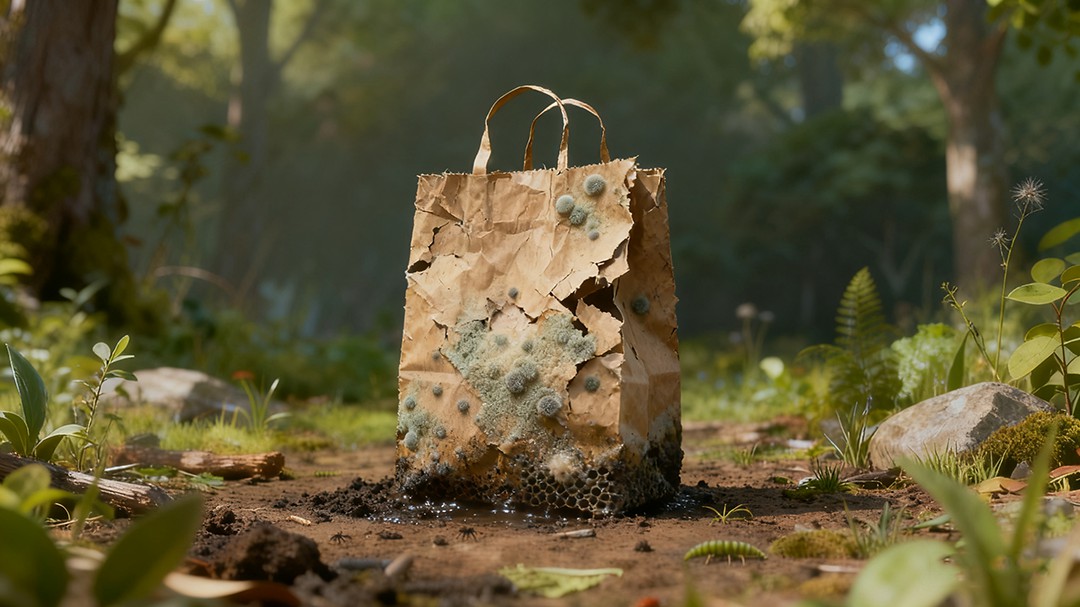
Stage 3: Biodegradation—From Form to Formless (6-12 Months)
This is the core stage. Microbes (primarily bacteria and fungi) use the bag's cellulose and hemicellulose as a food source. The enzymes they secrete break these complex organic molecules down into simple sugars, which are then converted into carbon dioxide, water, and humus (a nutrient-rich organic component of soil). The bag's physical shape gradually disappears, eventually 'returning to earth.'
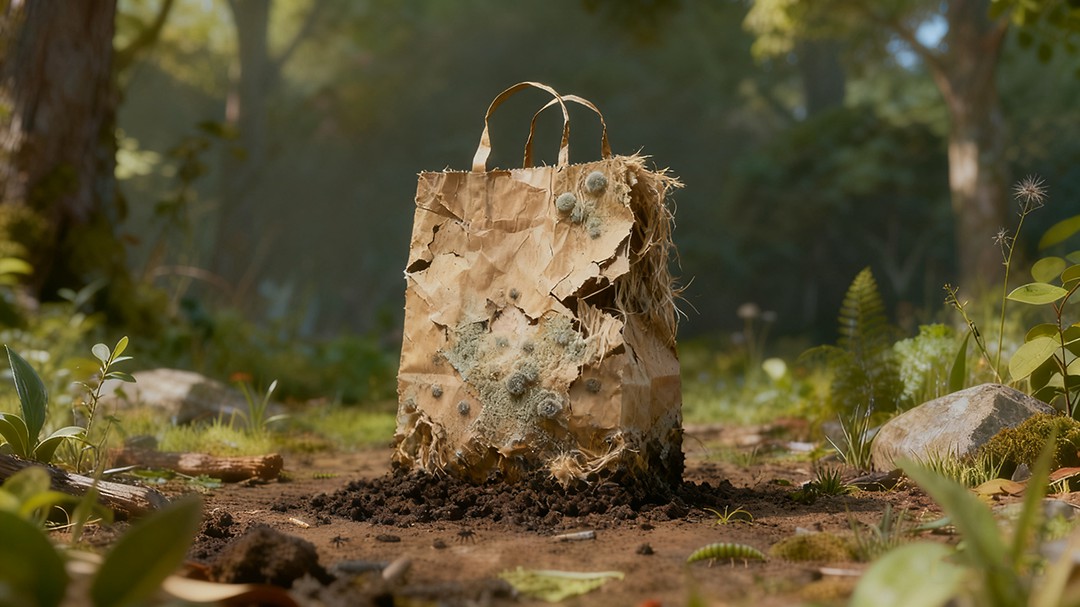
Stage 4: Complete Assimilation (1+ Years)
Under suitable conditions (e.g., moist, microbe-rich soil), a large kraft paper bag can typically fully biodegrade within a year, leaving no harmful residues. It has become part of the soil, nourishing new life.
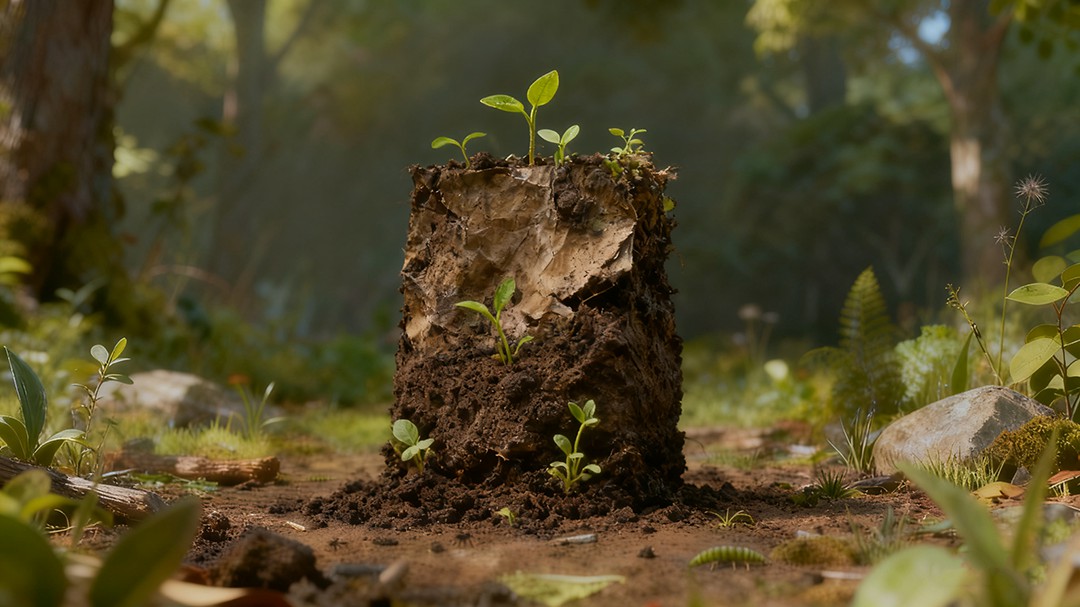
The Key Truth: The degradation of a kraft paper bag is a 'biologically-driven' carbon cycle process. It comes from plants and, through degradation, returns carbon to nature, forming a closed loop. In contrast, plastic degradation (if it occurs) is a 'physically-driven' fragmentation process, ultimately resulting in persistent microplastic pollution.
Chapter 2: A Clear Comparison: Kraft Paper Bag vs. Plastic Bag
To illustrate the environmental fate of both, here is a direct comparison:
| Characteristic | Kraft Paper Bag | Plastic Bag (Traditional PE) |
| Raw Material | Renewable wood resource | Non-renewable petroleum |
| Degradation Process | Biodegradation: Completely broken down by microbes | Photo-oxidation/Fragmentation: Becomes brittle and fragments under UV light |
| Degradation Time | Months to a few years, depending on environment | Centuries or more, and never truly disappears |
| End Products | CO₂, water, humus (harmless to nature) | Microplastics, toxic additives (pollute soil & water) |
| Visual Impact | Even as litter, its appearance is quickly broken down by nature | Persists in the environment for a long time, causing white pollution |
| Carbon Footprint | Can be higher in production, but offset by forest regeneration | High carbon emissions from resource extraction to manufacturing |
Crucial Note: This is precisely why FSC certification matters—it ensures this 'renewability' is responsible and sustainable.
Chapter 3: FSC Certification: Ensuring 'Eco-Friendly' is More Than Just a Label
When you choose a kraft paper bag, how can you be sure its raw materials didn't contribute to deforestation? This is where you need to recognize a crucial label: FSC® (Forest Stewardship Council) Certification.
What is FSC Certification?
It is an international, non-profit certification system designed to promote responsible global forest management. A product with an FSC label means its wood fiber comes from forests that meet rigorous standards for:
- Environmental Suitability: Protecting biodiversity and ecosystems.
- Social Benefit: Upholding the rights and welfare of local communities and workers.
- Economic Viability: Maintaining the long-term economic value and productivity of the forest.
Why is FSC Certification Critical for Kraft Paper Bags?
- It Eliminates 'Greenwashing': A kraft paper bag without FSC certification may source its wood from illegal logging or poorly managed forests. From a full life-cycle perspective, the environmental value of such a bag is significantly diminished. FSC provides a transparent, traceable chain of custody, giving your eco-choice a solid foundation.
- It Protects Primary Forests: FSC certification strictly prohibits the logging of High Conservation Value forests and encourages sustainable harvesting in managed plantations or well-managed natural forests.
- It is a Consumer's 'Eco-Compass': For brands and consumers wanting to make a responsible choice, looking for the FSC label is the simplest and most reliable method. It signifies that you are not just buying a bag, but investing in the future of the planet.









你的喜欢,就是我坚持写下去的能量器
YouArticle
已有0人推荐
Article recommendation
How to Choose the Right Pizza Box Material & Thickness — A Complete Guide
Paper Bag Printing Methods Explained: Flexo, Offset, Gravure, Digital, Screen & More
Handle Broken? Here’s How to Fix Weak Bag Handles (Kraft, Cardboard, or Custom)
Food-Grade Paper Cups | Custom Printed & Eco-Friendly
Inside Our Quality Lab — How We Test Every Batch of Custom Paper Bags & Boxes
